About#
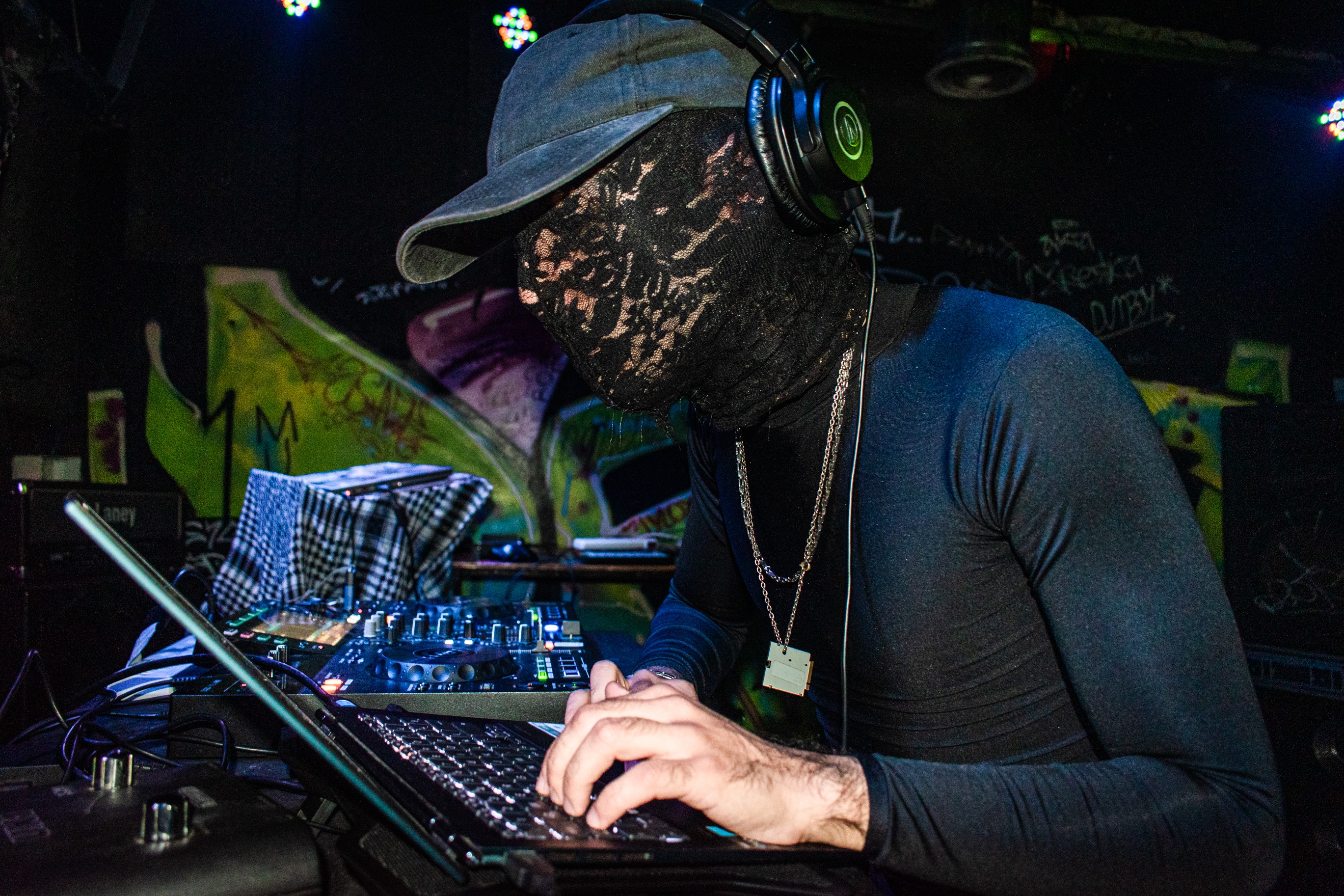
GEIKHA is a live coder and audiovisual artist based in Buenos Aires. Their work brings live coding and real-time video synthesis to clubs, concerts, and live music venues, keeping code close to the body, the dancefloor, and the collective experience.
In club and rave contexts, Geikha livecodes fast, sampled music rooted in Chicago Footwork, Juke, RKT, and other popular electronic traditions. They share stages with many DJs, pushing algorithmic approaches into high-energy dancefloors. In parallel, they develop a visual practice based on live video synthesis, working with multiple formats: CRT televisions, LED screens, flat screens, projections, and large-scale mappings.
A central part of this visual practice happens alongside the band Camionero, whose visual team they have been part of consistently for several years. Starting with the design of the cover for Todo lo sólido se desvanece en el aire (All That Is Solid Melts Into Air), Geikha participated in building the visual universe of the project through tours and cycles like Tracción a Sangre, exploring setups that combine different devices and scales.
Beyond stage work, Geikha actively participates in the tools and infrastructures that sustain live coding practice. They contributed intensively to the development and documentation of Hydra Video Synth, work with the TidalCycles–Strudel ecosystem, and are part of the peer-review process for the International Conference on Live Coding (ICLC). In 2022, they were selected for a grant by COSA (Clinic for Open Source Arts, University of Denver).
In Buenos Aires, Geikha studies Electronic Arts at UNTREF, where they organize live coding workshops, as well as at other institutions like UBA–FCEN, contributing to the growth of the local scene.
Across all these contexts, Geikha defines their practice as working-class art: experimental without detaching from the popular, blatantly political. Their work prioritizes mass appeal, the re-appropriation of accessible technologies, and an explicit stance against gatekeeping, understanding live coding as a collective cultural process rather than an individual display of virtuosity.